
Community faq and living next to the railroad
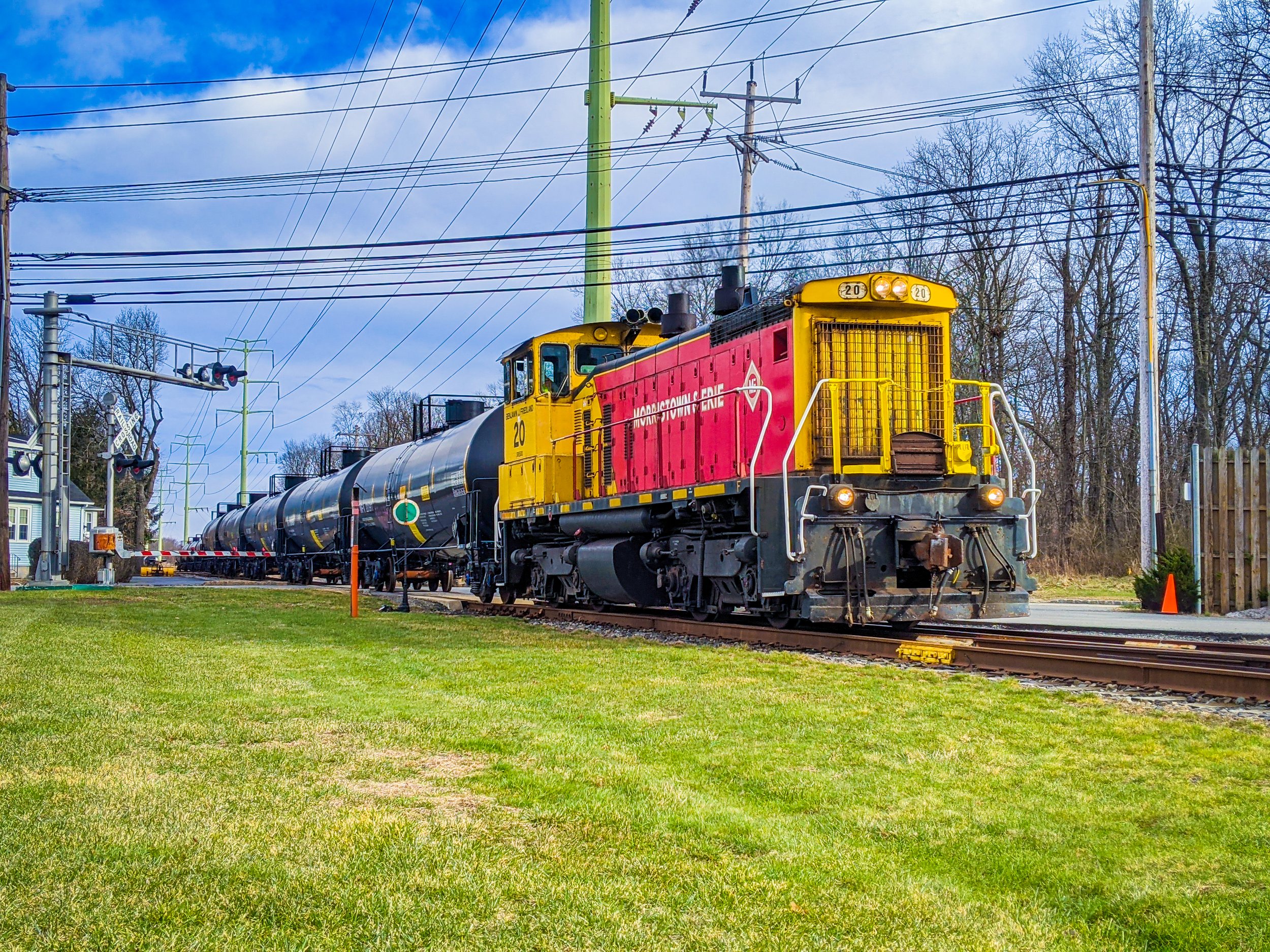
Since our founding in 1903, the Morristown & Erie Railway understands that train horns, bells, locomotive sounds, and nighttime railroad activity can be disruptive to nearby residents. We take community concerns seriously and work to operate as safely, efficiently, and respectfully as possible.
Freight rail service is an important part of the local economy. Night operations may be necessary due to customer schedules, railroad connections, track availability, crew availability, weather, and safety considerations. While we make every reasonable effort to minimize unnecessary noise, some sounds are required for safe railroad operations.
Why Train Horns Are Required
Train horns are not sounded as a matter of preference. Federal regulations require locomotive horns to be sounded when trains approach public highway-rail grade crossings.
The horn is a critical safety warning device for motorists, pedestrians, cyclists, and anyone near a crossing. Trains are large, heavy, and cannot stop quickly. The horn provides advance warning that a train is approaching. Train horns save lives. Additionally, the horn is required to be sounded near construction areas, passing other trains, passing workers alongside the tracks, and other instances as they arrive.
What You May Hear
Residents near the railroad may hear several types of normal railroad operating sounds, including:
Train Horns—Used when approaching public crossings or when needed for safety.
Bells—Used during certain movements, near crossings, in yards, or around personnel and equipment.
Locomotive Engine Noise—Locomotives may idle or operate at varying throttle levels depending on movement, air brake requirements, temperature, and operating conditions.
Coupling Sounds—Railcars may make loud sounds when being coupled, uncoupled, or switched.
Air Brake Releases—A sudden “whoosh” or release of air is a normal part of railroad brake operations.
Why do trains run at night?
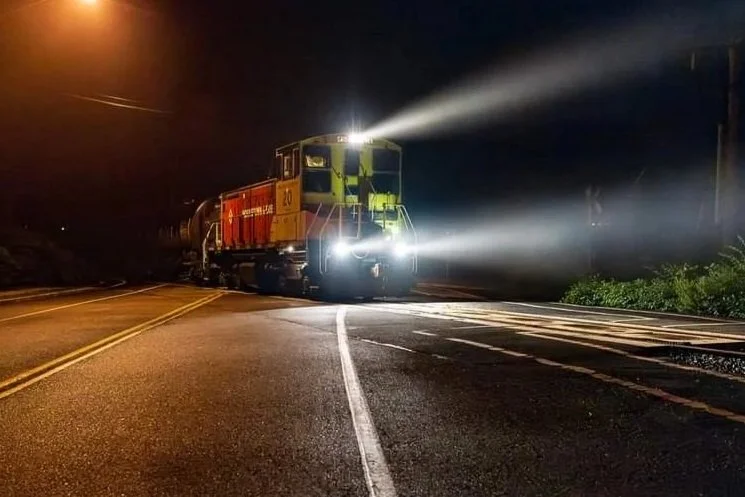
In some cases, nighttime work helps reduce conflicts with daytime passenger service, highway traffic, customer activity, and other rail operations. While we understand that nighttime noise can be frustrating, these operations support local businesses, reduce truck traffic, and help keep freight moving through the region.
We would all prefer to run trains during the day. It's much more convenient for our crews, plus—call us biased—but we think our engines look nicer in daylight than at night.
What M&E Does to Reduce Noise Impacts
Morristown & Erie Railway works to limit unnecessary community impacts wherever possible. Our efforts may include:
Avoiding unnecessary horn use while complying with federal law
Using appropriate throttle levels for the work being performed
Coordinating train movements as efficiently as possible
Maintaining equipment to reduce avoidable mechanical noise
Training crews on safe and professional operating practices
Working with municipalities when community concerns arise
Safety remains the railroad’s first responsibility. Noise reduction efforts cannot override federal requirements, railroad operating rules, or the judgment of train crews when safety is involved.
Frequently Asked Questions
Can M&E stop sounding the horn at night?
Not at public crossings unless an official Quiet Zone has been established. Federal rules govern train horn use at public highway-rail grade crossings.
Why is the horn so loud?
Train horns are designed to be heard by motorists and pedestrians before the train reaches a crossing. Their purpose is to provide a clear safety warning.
Why do trains idle?
Locomotives may need to idle to maintain air pressure, protect mechanical systems, support onboard systems, or remain ready for safe movement.
Why do I hear coupling or banging sounds?
Railcars are heavy steel equipment. When cars are coupled, uncoupled, or switched, loud impact sounds may occur as part of normal railroad operations.
Who creates a Quiet Zone?
The municipality or local public authority begins and manages the Quiet Zone process. The railroad cooperates in the process, but it does not independently establish Quiet Zones.
Report a Noise Concern
If you have a specific concern about railroad noise, please contact us with as much detail as possible so we can review the situation.
What you can do to help
Spread the word—stop, look, and listen!
Stop for activated crossing warnings
Don't race a train
Don't walk on railroad tracks
Report aggressive drivers:
License plate number
Description of the vehicle and driver
Location it occurred
Time
Direction the car was traveling
Our Commitment
Morristown & Erie Railway is committed to safe, reliable freight service while being a responsible neighbor in the communities we serve. We appreciate the public’s understanding as we continue to support local rail service throughout the region.
GIVE US SOME FEEDBACK-We’d love to hear from you
DO NOT USE THIS FORM FOR EMERGENCIES
Report railroad emergencies to 1-800-274-5761 or call 9-1-1.